
– June 4, 2026 (Schweizer Musikzeitung)
Once again, the cultural community is directly endangered by a populist initiative that claims to limit the population.
One of the hallmarks of populism is the claim to offer simple or even simplistic solutions to complex issues, and to make people believe that these so-called solutions will benefit the majority of the population, even when this is not at all the case. In the age of the Internet, social networks and, more recently, AI, which is used on a massive scale to produce and disseminate biased information, the resonance chamber for populist thought has grown to the point of being able to manipulate whole swathes of society with great ease, thanks in part to psychological techniques based on cognitive bias. A climate of unease or anxiety (inflation and loss of purchasing power, war, pandemics, environmental degradation, etc.) can make many people more receptive to these devious techniques that exploit fears. This is how the far right has managed to make inroads in most European countries, in proportions that would still have seemed improbable at the start of this millennium, when many thought that the terrible events of the 20the century and the fall of dictatorships on both sides of the former Iron Curtain would have provided lasting immunity for the citizens of this continent.
The scapegoat strategy
The designation of scapegoats to be sacrificed in order to re-establish a certain conception of order has always been part of populist rhetoric. Charged with all evils, they are hunted down, hounded, silenced, if not worse. Whatever the problems, they are held responsible, and the act of atonement is supposed to improve the community’s situation. In Switzerland, as in many other countries, ultraconservative circles have for decades been pointing the finger of blame at «foreigners», while never detailing who exactly belongs to this group. Are they talking about the wealthy residents who benefit from low taxes, or the workers and engineers that Swiss companies are forced to recruit from EU countries due to a lack of skilled labor available in Switzerland? Unsuccessful asylum seekers or second-home owners? Commuting cross-border commuters, university students or second- or third-generation immigrants, naturalized or otherwise? Everything is blurred and mixed up in their discourse, since «foreigners» are held collectively and indiscriminately responsible for all or almost all the ills, from the rise in crime to the partly speculative and partly mortgage-related rise in rents. If public transport is overcrowded at certain times of the day, the finger will not be pointed at decades of under-investment in transport infrastructure. If healthcare costs rise, the blame will be laid at the door of those who, being on average younger than the ageing Swiss population, cost health insurers less, statistically speaking. They point to the fact that foreign pensioners make more frequent use of supplementary benefits, without explaining that this is due to the fact that, as manual workers or housekeepers, they were often underpaid and for a long time did not have the right to a second pillar. Clearly, scapegoating also serves to conceal the fact that the same ultraconservative politicians are partly responsible, through their votes in parliament, for a number of situations unfavourable to the general population, for example by systematically rejecting tenant protection, land-use planning and limits on concreting, attacking rail investment, fighting measures to protect the environment, biodiversity and the climate (e.g. the 2025 motion proposing, in imitation of the current US President, withdrawal from the Paris Agreement), weakening employee protection, particularly in the face of dumping, and opposing the minimum wage. Knowing all this, how can we trust them when they evoke these problems to argue in favor of their initiative, how can we believe that they would suddenly, for once, be concerned about a sustainability they never cease to fight against?
The chaos strategy
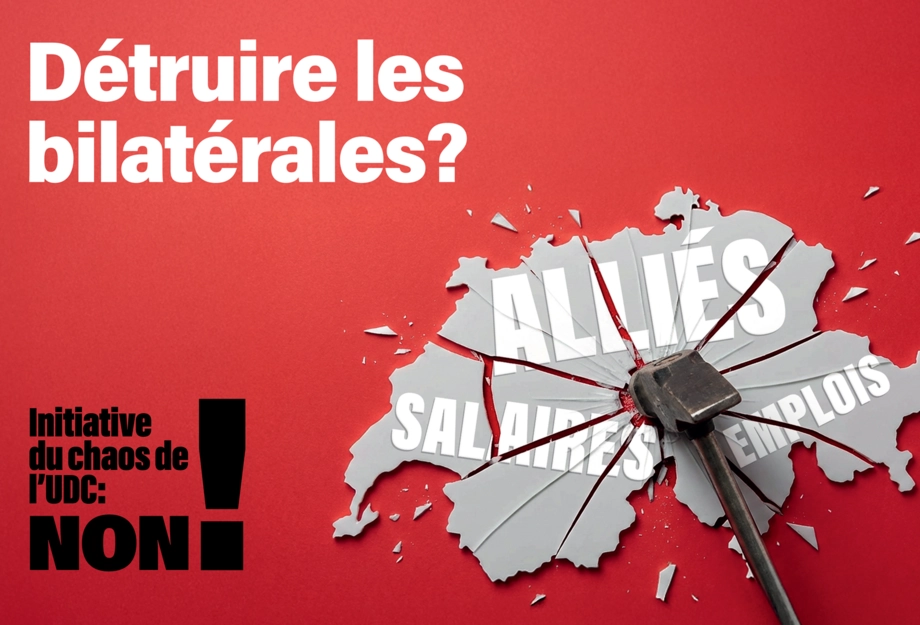
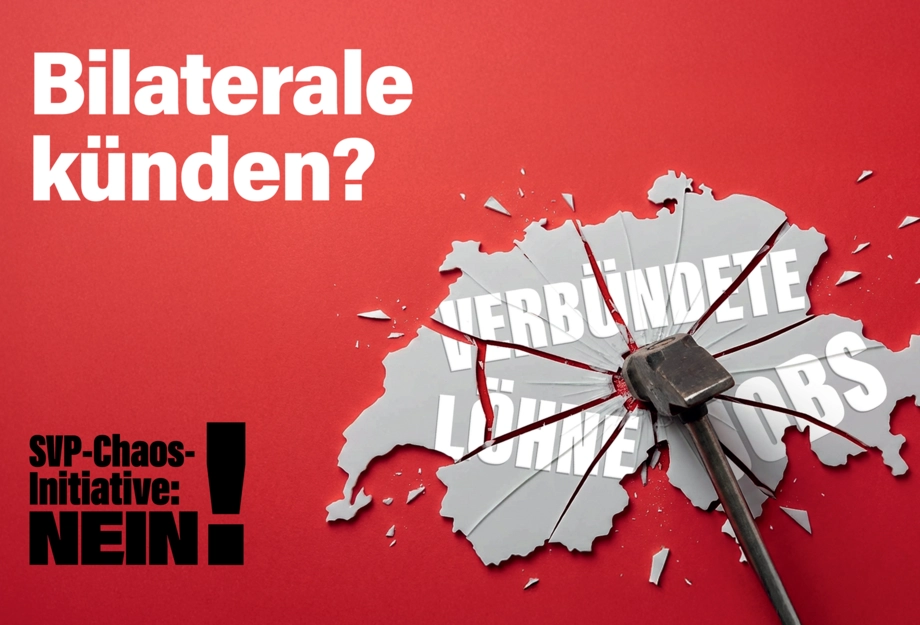
These are the same circles that largely approved tax cuts, thus attracting numerous foreign companies, which not only created jobs in Switzerland, but also brought in employees when the Swiss job market was not sufficient to meet the specializations in demand. If the SVP’s federal initiative put to the vote on June 14 were to be accepted, what would happen to Swiss and foreign companies that could no longer develop their high-tech sectors due to a lack of personnel? What would hospitals and nursing homes do if they ran out of nurses? Who would take care of cleaning? How can we make up for the lack of qualified people? It’s not just a question of increasing the population, because the initiative launched by the SVP expressly calls for the free movement of people with the EU to be called into question, in which case even the maintenance of the current level of workers could be seriously jeopardized. This is all the more true given that, in Switzerland, there are already more people leaving the labor market due to retirement than young people entering it. This could not be compensated for by the return of some of the Swiss living in the EU, who would de facto lose many of their current rights acquired thanks to the same free movement, as they have not necessarily been trained for the jobs that would remain vacant. These rapid changes in the economy and the labour market would in any case upset the accounts of the AHV and second pillar schemes, probably paving the way for an increase in the retirement age and a further reduction in the BVG conversion rate. This is taking place against an unfavorable economic backdrop, with the abandonment of the free movement of persons leading to the domino effect, via the guillotine clause, of the end of all bilateral I agreements with the EU, our main economic partner, at a time when the current US administration has clearly shown how it intends to treat Switzerland. Also linked to the free movement of people, wage protection would be jeopardized, with the threat of a return to wage dumping and job insecurity.
Here’s another example of the potential consequences: among the agreements that Switzerland would have to terminate as soon as its permanent resident population exceeds nine and a half million (art. 197, para. 15, par. 1), the termination of the Dublin Agreement would cut Switzerland off from the EU asylum system. This would mean that any migrant whose asylum application had been rejected in Europe could lodge a new one in Switzerland. The country would be totally clogged, with a massive influx of migrants already rejected elsewhere. Is this really the way to limit the population?
Consequences for culture and musicians
The free movement of people between Switzerland and the EU has been a major asset for Swiss musicians, many of whom have been able to find top positions in European ensembles, orchestras, music schools and cultural institutions. Conversely, excellent pedagogues have come to teach at our universities, and outstanding musicians have contributed their skills and talents to Swiss ensembles and orchestras. These exchanges have always been important to the country’s cultural development, and they would be irreparably jeopardized by the approval of this initiative, for we can be sure that if the number of people allowed to settle in Switzerland were strictly limited, those engaged in artistic activity would have absolutely no priority. Conversely, producing or taking part in concerts, shows or residencies in the EU would become complicated for Swiss musicians. Another difficulty: as mentioned above, since the bilateral agreements are linked, abandoning the free movement of people would automatically entail the abrogation of the six other Bilateral I agreements, some of whose provisions are essential for culture, such as those of the agreement on land transport with regard to travel, touring and the transport of stage equipment.
Less cooperation, less co-production, less diversity, less cultural exchange, less international presence, less influence: the consequences of adopting this initiative could be catastrophic for Swiss culture in general, and music in particular.
https://kultur-statt-grenzen.ch